
The Myth of the AI Age
How the Ukraine crisis revealed the reality of the technology revolution

The development of digital technologies since the mid-1990s ensured the global community that the upcoming era will belong to Internet advancements. A range of analytical papers about cyberspace discussed the influence of innovations on the economy, labor forces, warfare, and even the decision-making process.
The COVID-19 lock-down substantiated the idea of the digital revolution as governmental affairs, office work, and higher and secondary education were conducted in a remote mode based on electronic devices. Since then, online meeting platforms have been thriving, and demand for cybersecurity fields has substantially increased.
Meanwhile, mass data stored in servers enables companies to accelerate artificial intelligence that relies on data, computing power, and complex algorithms. The release of ChatGPT-4 by OpenAI is hailed as the cornerstone of the trend and shapes the initial imagination about how the Fourth Industrial Revolution will look like. To keep up with the mainstream, governments – no matter whether developed or developing countries – heavily focus on programs to support AI advancements, whereas tech giants demonstrate their systems to stay competitive. For example, Google introduced the Bard service.
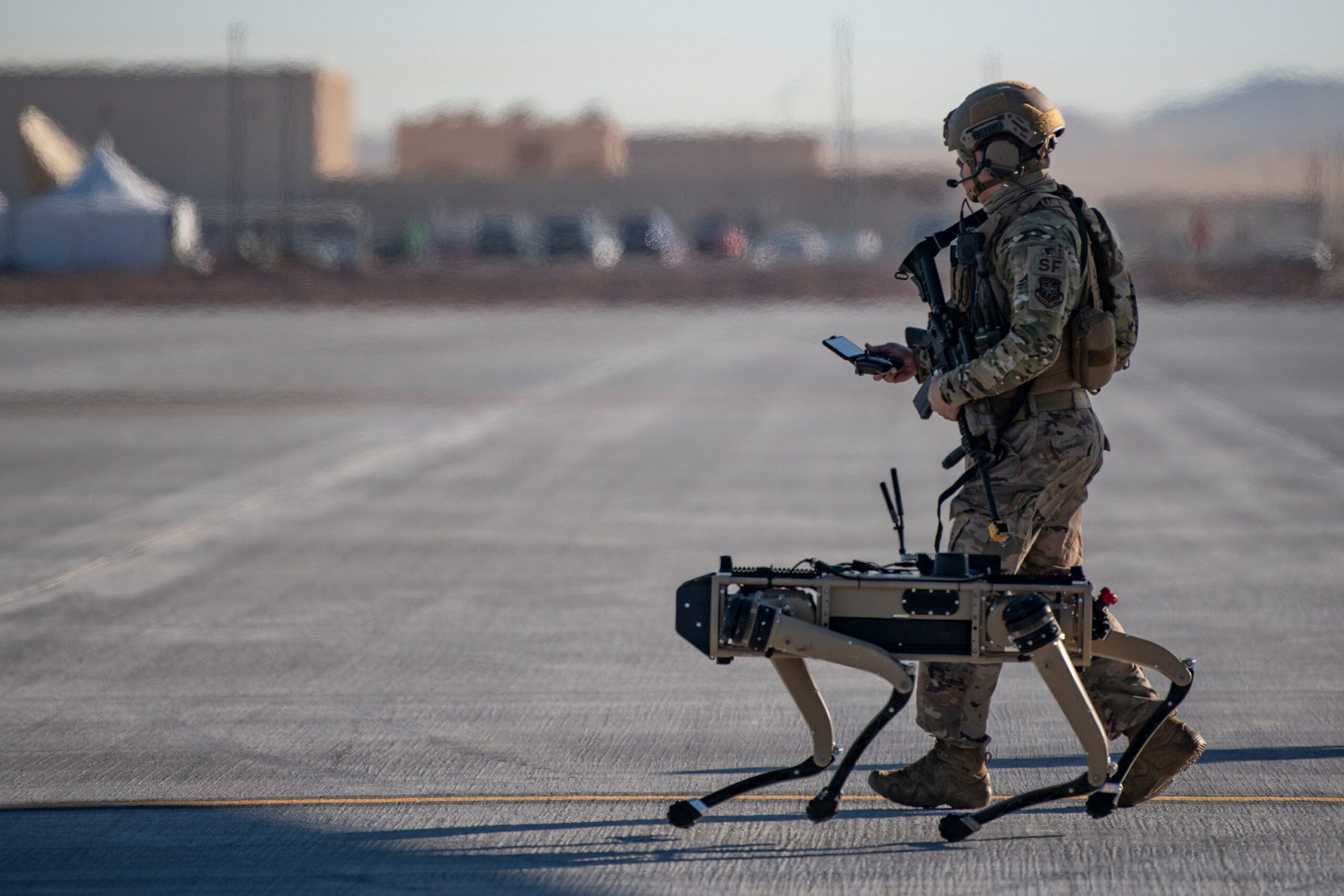
Furthermore, the triumphant operations of Bayraktar drones in the second Nagorno-Karabakh War in 2020 raised expectations about the implementation of unmanned weapons in warfare. Self-targeting military technologies powered with AI are supposed to decrease the duration of wars and the loss of soldiers. As self-operating techniques are produced in plants, the role of the population to recruit forces will be replaced by the industrial capacity to construct machines.
However impressive the tendency seems, several side trends and events should not be overlooked.
Ukraine War
First of all, it is the war in Ukraine that changed perceptions after more than 17 months. Neither Russia nor Ukraine and its supporters have utilized artificial intelligence. Nearly all the systems – except Clearview AI, which was used to recognize dead Russian soldiers – are operating in almost traditional manners. Admittedly, both sides exploited data analysis technologies as Alex Karp, the CEO of Palantir, reportedly said that “his enterprise is responsible for most of the targeting in Ukraine, such as tanks and artillery getting timely information from satellites and social media feeds to visualize friendly and enemy positions, to understand troop movements and to conduct battlefield damage assessments.”
Nevertheless, scientists, executives, and former military personnel consider that AI-induced warfare is a matter of the future and describe Ukraine as a living lab. In fact, Russian and Ukrainian armies are conditioned to wage conventional warfare and they are in trenches as during Napoleonic times.
Real-time-communication tactics of the US and Bayraktars of Turkey turned out to be insufficient in the biggest war of Europe after World War II. Similarly, Elon Musk’s Starlink plays only a marginal role at the beginning of the crisis. From the point of trade, the nineteenth-century-style blockade of Ukrainian ports by Russia cannot be resolved by any know-how and Moscow is manipulating the Black Sea Grain Deal for pressure.
In the end, the potential of contemporary technologies is rediscovered in Ukraine and some opinions about the revolutionary shifts appeared to be overrated and are yet to become reality.
Cold War with China
In the meantime, the United States waged a trade war against China under Trump’s administration. Around the dispute over 5G transmitters, Washington D.C. began to restrict the delivery of critical microelectronics to China. After his victory in the 2020 election, Joe Biden perceived the antagonistic cycle and the CHIPS Act was adopted to empower the semiconductors industry. Naturally, Beijing retaliated and imposed export control on gallium and germanium which are basic raw materials to manufacture chips.
The resulting polarization of technology giants more or less retains the dawn of the AI age on the brink. The geopolitical rivalry between the US and China undermines the stable development of two critical elements of artificial intelligence: computing power and data.
Primarily, the polarization between those two states constrains opportunities for scientific and research collaboration in microelectronics that is responsible for building neuro-links of artificial intelligence. Moreover, in an already globalized world where labor is divided among nations, concentration of semiconductor manufacturing will cost for a single country, even for a group of them.
On the other hand, a balkanization of the Internet regulates – if not wholly blocks – the free flow of data that is needed to train intelligent technologies. In reality, after China’s Great Firewall and Iranian controls over the World Wide Web, Russia is following to curb the global data canals. The shortage of variety makes AI less effective and efficient.
Lastly, China’s invasion of Taiwan, i.e. a cluster of modern semiconductors, and the subsequent destruction of foundries would sever the supply chains of logic chips, thus erasing the pearls of the industry. From the recent mood of Beijing, it is not difficult to guess that the possibility of an intervention into the island is increasing. Nevertheless, industry leaders are unable to find an alternative area whither to relocate their manufacturing activities. As a result, an interruption of the critical technology due to a new collision in East Asia is likely to bring the third AI Winter instead of its dawn.
In conclusion, the war in Ukraine reveals that the age of AI has not come yet and another crisis related to China may delay the new era.